 The Brookfield Community Hub (BCH) can become more than a collection of individual programs. Together with the Riverside Park Community Association (RPCA), our schools, students, service organizations, governments and residents, it can help connect food security, job-ready skills, health and aging, neighbour-to-neighbour support, zero waste, nature and responsible community growth.
Sometimes a large community idea begins with something very small.
For us, it began with a let-us hypothetical on lettuce and now it is aligning and qualifying for several national priorities be they affordable communities, utility infrastructures or social programs.
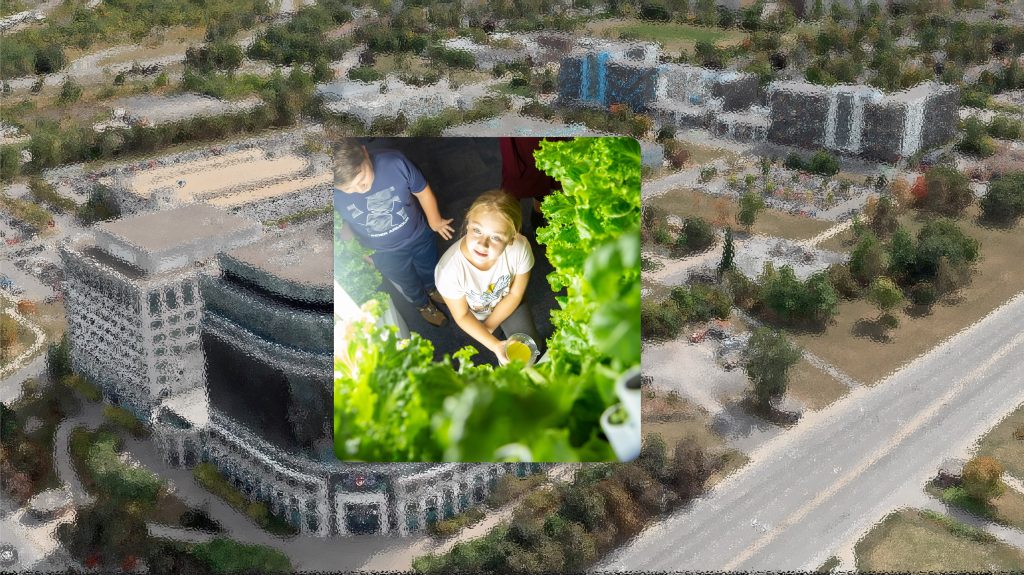
 When Erin began harvesting our first hydroponic crop, pulling one beautiful head of lettuce after another from the growing system, the quantity was almost overwhelming.
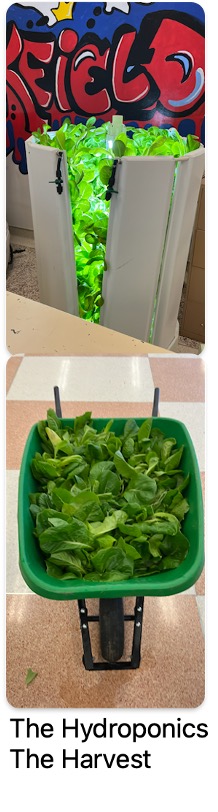
We knew what the system was designed to produce. Seeing the harvest in front of us was entirely different.
And then, within about an hour, it was gone—picked up and heading into the community.
In just 28 days, young lettuce plants had become fresh, crisp and succulent food ready to be enjoyed.
Our first hydroponic growing cycle demonstrated something tangible: fresh food can be produced locally, year-round, close to the people who will eat it.
With capacity for approximately 600 heads per growing cycle, the farm also gives us an opportunity to explore something larger—a year-round model connecting food production, education, community distribution and potentially entrepreneurship.
Improvements to the farm automation, including separating pumping and lighting functions, have improved operational safety and created a better environment for learning.
But perhaps what we can grow alongside the lettuce is even more important.
Students can gain practical experience in environmental science, technology, engineering, automation, food production, nutrition, business and the arts. Student Council activities and other programs could provide opportunities to turn the farm into an applied Science, Technology, Engineering, Arts and Mathematics (STEAM) classroom.
Young people can participate in the entire cycle:
Seed → growing → technology → harvesting → food preparation → distribution → waste recovery → back to growing.
That is how a hydroponic farm becomes more than equipment.
It becomes a living classroom and a pathway to job-ready skills.